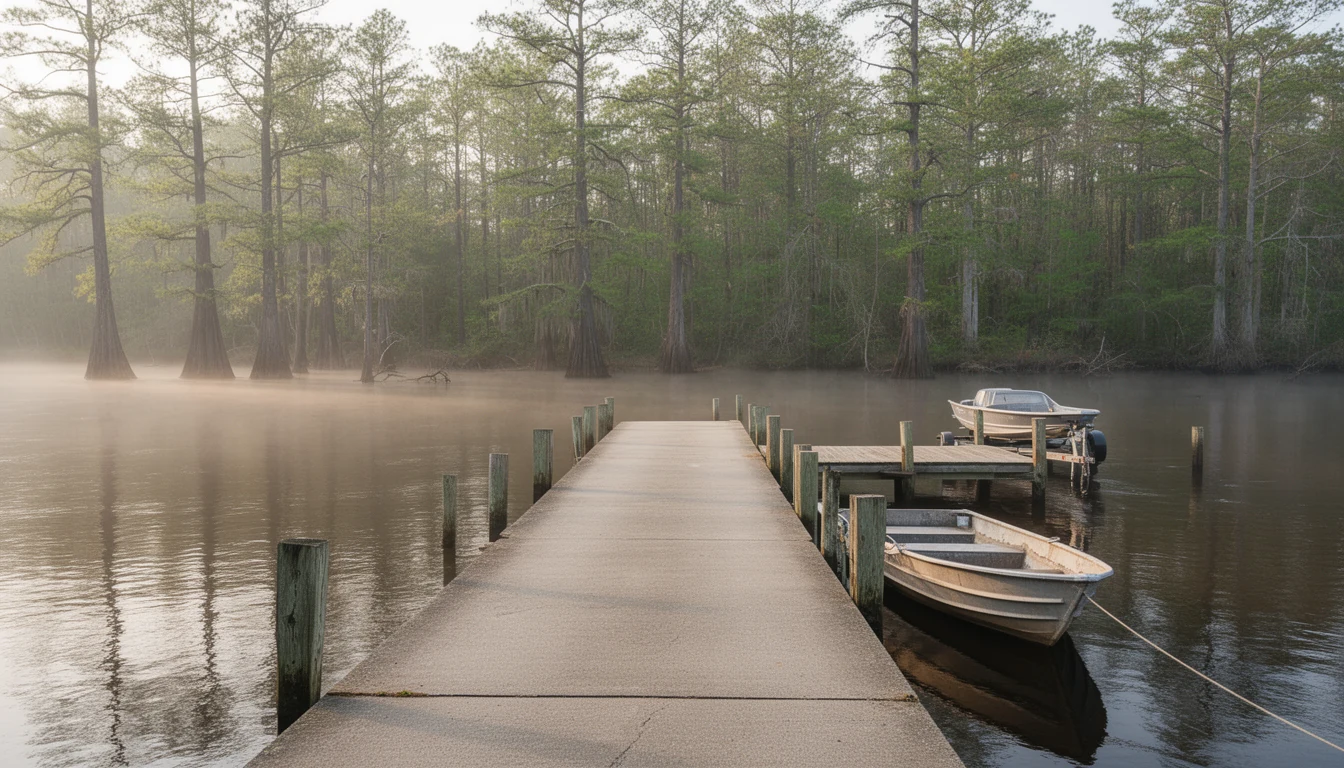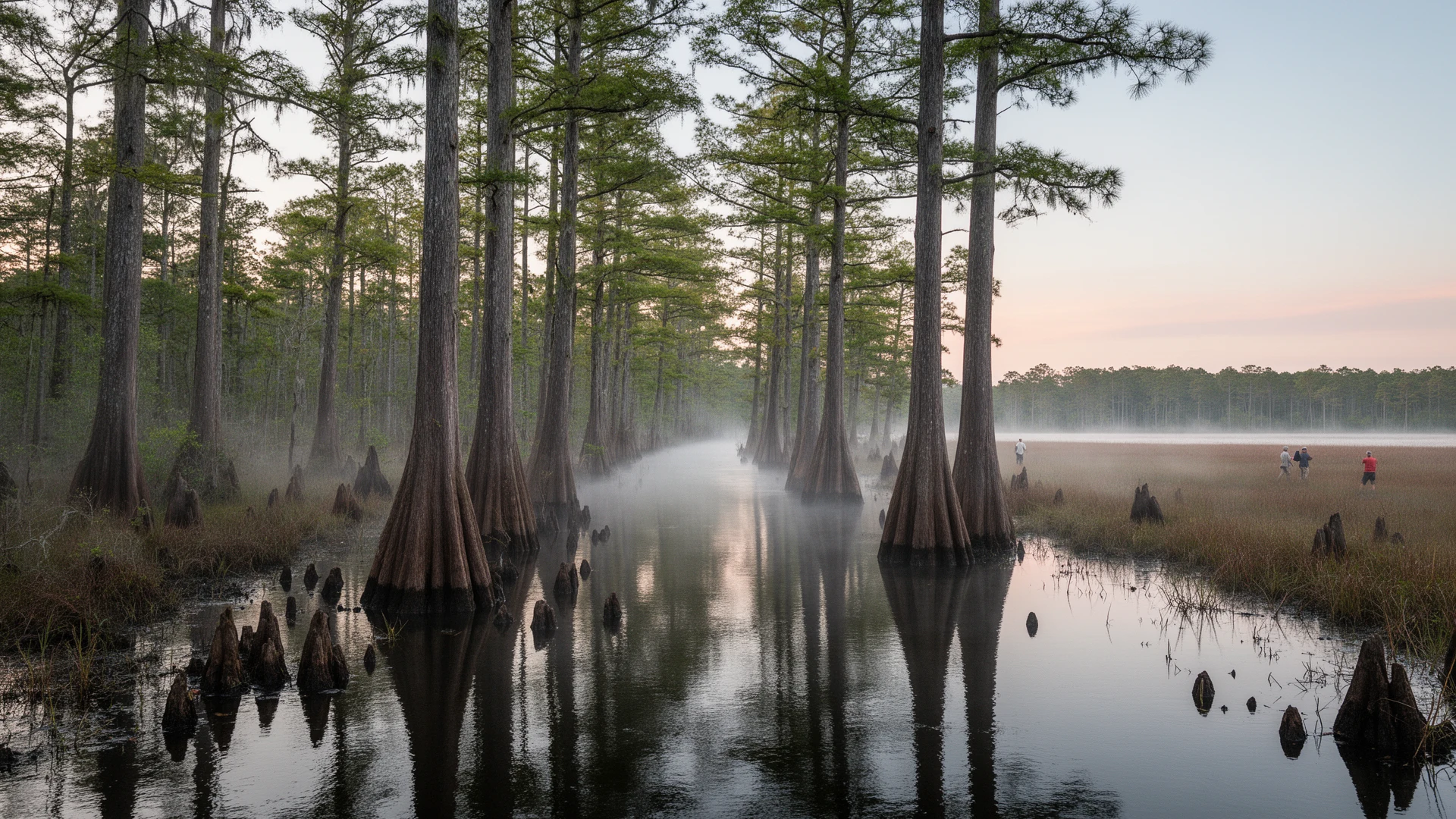

There’s something about the way the Cashie River moves through Bertie County — dark tea-stained water slipping past cypress knees, the Chowan opening wide at the county’s eastern edge. If you’re shopping for waterfront here, you already know: this is a different kind of coastal Carolina. It’s not the Oceanfront. It’s better — quieter, wilder, more affordable.
But waterfront property along blackwater rivers comes with a specific set of due diligence questions that don’t come up on a standard home inspection. Here are five every buyer needs to answer before writing an offer.
Step 1: Verify Existing CAMA Permits
The Cashie and Chowan Rivers fall under the NC Coastal Area Management Act (CAMA) jurisdiction. That means any existing bulkhead, dock, pier, or shoreline stabilization on the property must have a recorded CAMA permit from the NC Division of Coastal Management (NCDEQ).
Why this matters: Many older Bertie County waterfront structures were built before CAMA permitting became the norm, or were installed without ever getting a permit. Buying a property with an unpermitted bulkhead means you can’t repair it under the minor-repair exemption — you’d need a full permit for any significant work.
Check the chain of title at the Bertie County Register of Deeds for recorded permits. If the seller can’t produce a CAMA permit for a permanent shoreline structure, that’s a red flag worth exploring during your due diligence period.
CAMA permit fees range from roughly $60 for a general permit to $4,000+ for major shoreline work. But the real cost of an unpermitted structure isn’t the permit fee — it’s the liability if the state requires removal.
Step 2: Understand Your Riparian Rights (and Limits)
Here’s the piece that surprises buyers who come from non-coastal states: you cannot own the water.
North Carolina follows the public trust doctrine. The Cashie and Chowan are both navigable waters — the Chowan is recognized as a public highway under state law. The public has the right to boat, fish, and anchor up to the ordinary high-water mark. You own the land; the state holds the water in trust for everyone.
What this means for you:
- You cannot exclude boaters or anglers from the water in front of your property
- You can build a private dock (with a CAMA permit), but you can’t post “no trespassing” signs on the river
- Riparian rights include reasonable use and access, not exclusive ownership
What you should verify at the Register of Deeds: the deed’s description of your waterfront boundary. Does it say “to the mean high-water mark” or “to the centerline of the stream”? These have very different ownership implications.
Step 3: Check the Flood Zone Before You Fall in Love
Both the Cashie and Chowan have established floodplains, and Windsor has a documented history of flooding. Hurricanes Floyd (1999) and Matthew (2016) both pushed the Cashie past major flood stage. Roughly 16% of Bertie County properties carry severe flood risk.
Pull a FIRMette from the FEMA Map Service Center for the specific property. The key zones:
- AE zone — 1% annual flood risk (100-year floodplain). Flood insurance is mandatory if the property has a federally backed mortgage. Expect premiums of $700–$2,500/year for a $250K building, depending on elevation.
- X zone — Low to moderate risk. Not required by law, but 25% of NFIP claims come from X zones. A preferred-risk policy runs ~$400–$600/year.
- Regulatory floodway — The area that must remain clear for flood conveyance. No new development is permitted without a CLOMR/LOMR.
If the property is in AE zone, ask the seller for the Elevation Certificate. This single document determines your actual insurance rate, and without it lenders assume the worst case.
Step 4: Inspect the Septic System (Seriously)
Bertie County’s river-adjacent soils are primarily hydric — meaning they’re saturated, flooded, or ponded long enough to create anaerobic conditions. Common series like Cape Fear, Leaf, and Lumbee are exactly what you’d expect along a blackwater river floodplain.
The problem: These soils frequently fail standard perc tests.
NC law requires a minimum 50-foot setback from the normal water level of a river for a septic drainfield. On a narrow 200-foot-deep lot, that eats a quarter of your buildable depth before you’ve placed a single pipe.
- Conventional septic system: ~$4,000–$8,000 — only works if the perc test passes
- Alternative engineered system (sand-filter mound, low-pressure pipe): ~$15,000–$35,000 — required when conventional won’t work
Before you close: get a copy of the existing septic permit from Bertie County Environmental Health. Verify the system’s age, its maintenance records, and whether the drainfield was submerged during any major flood event. A compromised system may need replacement at the buyer’s expense.
Step 5: Know the Rivers and the County
The Cashie is a 38-mile blackwater river that runs entirely within Bertie County — one of the only rivers in NC with that distinction. It’s designated as a State Canoe Trail from Windsor to the Albemarle Sound, roughly 17.5 miles of paddleable water through cypress-gum swamp. Largemouth bass, crappie, and chain pickerel keep anglers coming back.
The Chowan River forms Bertie’s eastern border and opens into the Albemarle Sound. It’s a designated Natural Heritage Area — one of the largest wintering waterfowl habitats on the East Coast. Striped bass spawning runs draw boaters from across the region.
The Roanoke-Cashie River Center at 205 E. Water Street in Windsor (housed in the historic Harper House) offers canoe rentals, educational exhibits, and a waterfront boardwalk. It’s your best resource for understanding the river system before you buy into it.
Bertie County’s population sits at roughly 17,500 and is declining about 1-2% per year — typical of rural eastern NC. Windsor, the county seat, holds about 3,100 residents on the Cashie. This isn’t a growth market. It’s a value market: lower prices, bigger lots, more privacy, and a direct connection to a working river landscape that most of North Carolina doesn’t know exists.
The Bottom Line
Waterfront on the Cashie or Chowan is a genuine opportunity — priced well below Albemarle Sound comps and miles below anything on the coast. But the due diligence is specific. CAMA permits, riparian rights, flood zones, and septic soils each carry their own questions. Get clear answers on all five before you let the cypress trees sell you.