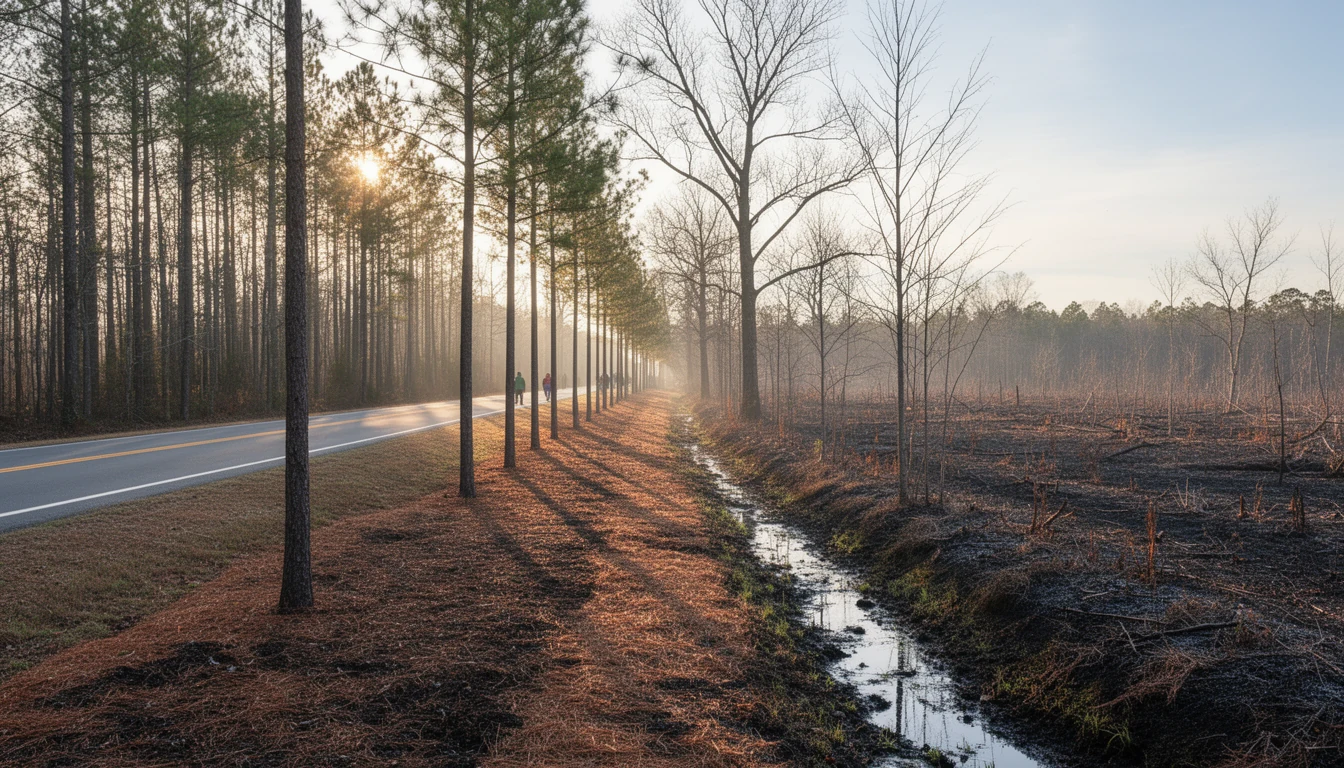


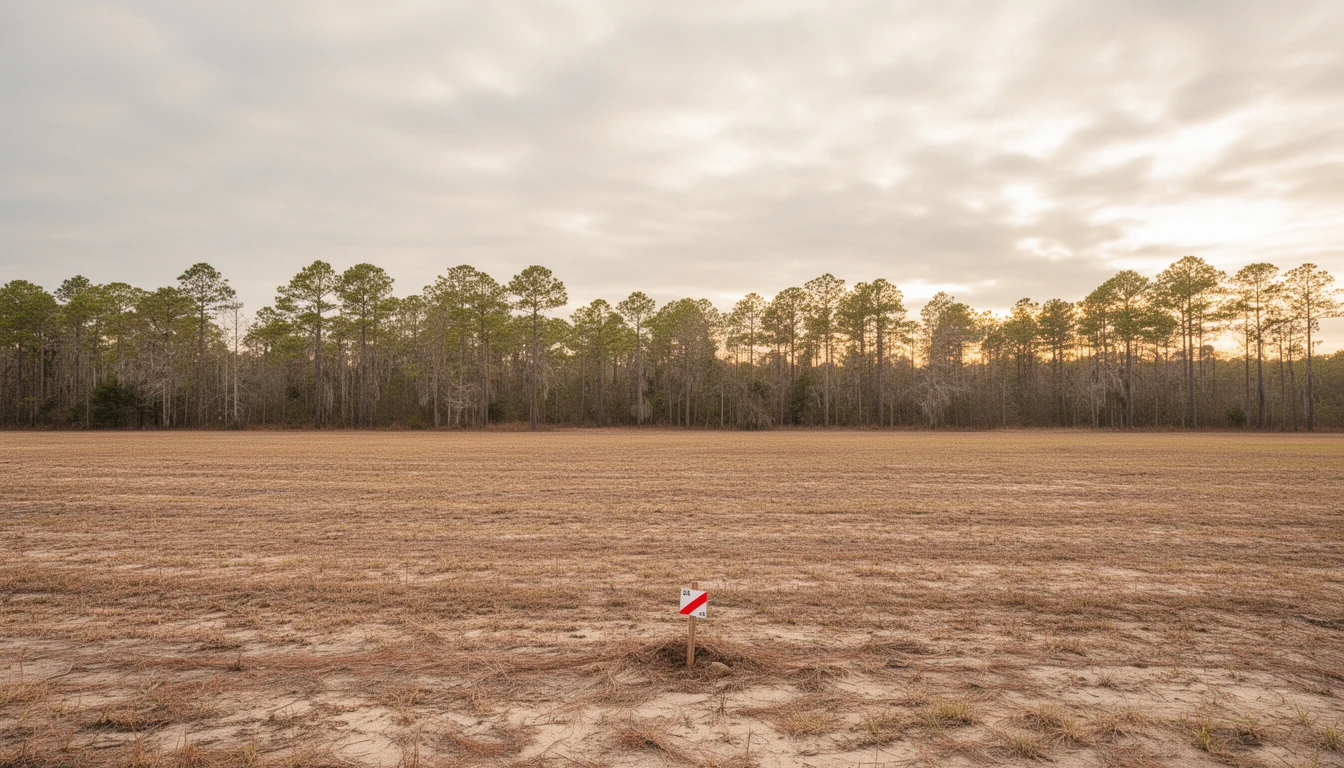
The listing says “buildable acreage,” and the price says this is the cheapest land you’ve looked at all month. Then you drive the tract, and you notice something nobody mentioned in the ad: the nearest sewer line is in a town 20 minutes away.
In Bertie County, that’s not an oversight. It’s the market.
Why does septic matter so much in Bertie County?
Most of Bertie County is unsewered. Windsor has municipal service, and a few built-up areas do too, but the majority of the county runs on private septic systems. That flips the usual buying math: instead of asking whether the house is sound, you’re asking whether the ground itself will support a home at all.
Septic feasibility isn’t a minor checkbox on a rural acreage purchase. It’s often the determining factor. A tract with beautiful timber and a creek running through it can be nearly worthless as a homesite if the soil won’t drain.
What does a perc test actually tell you?
A percolation test, or perc test, measures whether the soil on a specific building site can adequately drain and treat wastewater from a conventional septic system. It’s a soil test with a permit attached, and it’s done on the ground you intend to build on, not on the tract as a whole.
A passing result means a conventional system is likely to work. A marginal result might require a larger drain field or a different location on the same tract. A failed result can require an engineered system at meaningfully higher cost, or it can rule out residential use of that building site entirely.
That’s why the perc test happens before you remove your due diligence contingencies, not after. If you’re looking at land, order the test or review any existing county health department records on file for the tract before you commit.
What does a septic system cost when the soil is difficult?
On good ground, a conventional system is the affordable path. On hydric or wetland-adjacent soils, the picture changes: engineered and alternative systems cost substantially more, sometimes into five figures, before you’ve poured a single foundation.
Septic inspections in North Carolina generally run $300 to $600 depending on scope, from a basic visual and pump-out verification at the low end to a full camera inspection of the drain lines at the high end. That’s a small price compared to discovering a failed drain field after closing.
What else should you check before you waive due diligence?
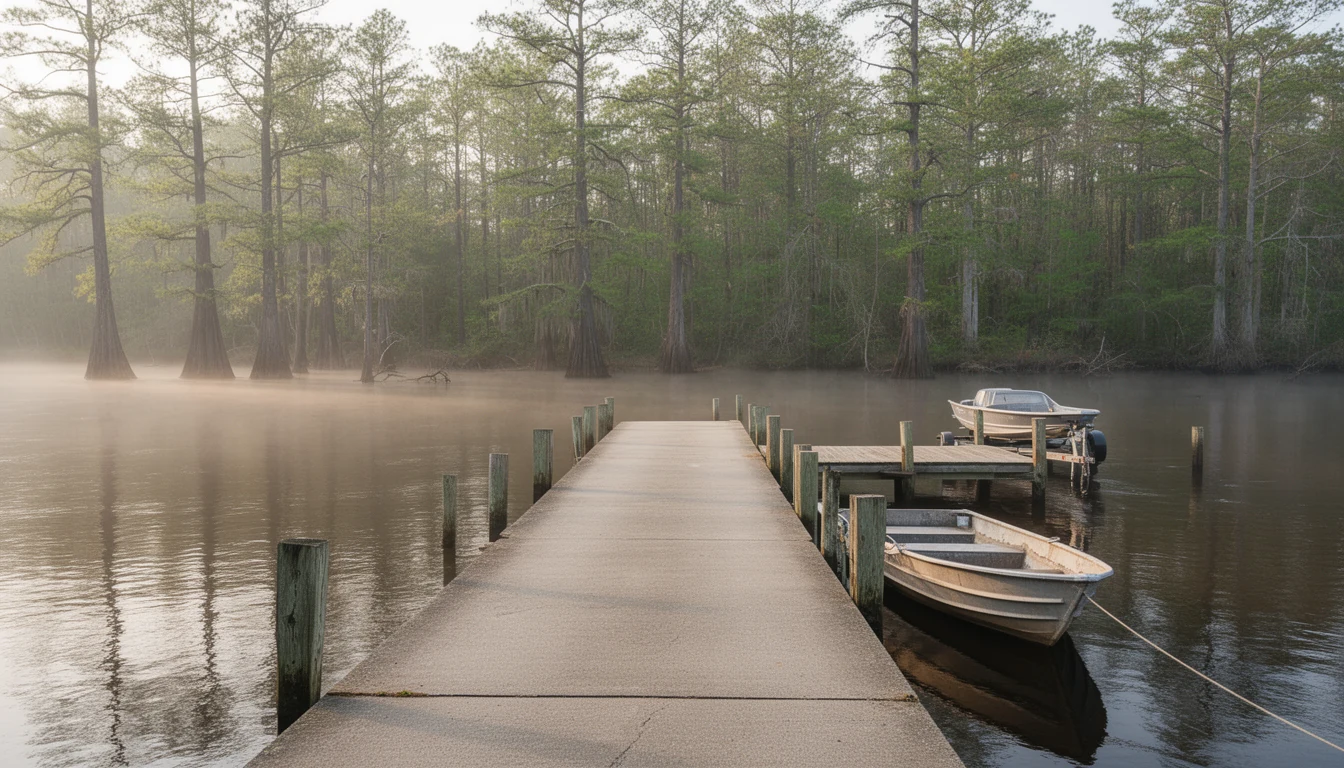
Bertie County has real wetlands acreage, and wetlands designation affects buildability, permitting, and insurance. The areas closest to the rivers and the Albemarle Sound shoreline, the Chowan River corridor near Colerain and Powellsville, the Cashie River through and around Windsor, and the Roanoke River along the county’s southern edge, carry the most flood zone and wetlands exposure. Interior tracts aren’t automatically clear, they just deserve a closer look later in the process.
Pull the FEMA flood map for the specific parcel at the Map Service Center. Check the National Wetlands Inventory for mapped wetlands on the tract. If either shows anything that could touch a home site, get a wetlands delineation from a qualified environmental consultant before you get attached to a building location. Don’t rely on a general sense that an area floods or doesn’t. Check the parcel.
Well water is the other half of the private-utility equation. A well water quality test covers bacteria, nitrates, and other standard panels, and it’s separate from septic feasibility. Both belong in your due diligence period, and neither is covered by a standard home inspection.
Where do you start?
Bertie County’s Environmental Health office, part of Albemarle Regional Health Services, handles septic permits and well records countywide, in Windsor and every smaller town and unincorporated area alike. Existing septic permit records on file there are usually the fastest way to confirm a system’s approved design flow and bedroom count before you assume anything.
Here’s the honest trade-off, and it’s worth sitting with: the cheapest tracts per acre in Bertie County are often the cheapest for a reason. The land that passes a perc test, sits outside the mapped wetlands, and has recorded access carries a higher price per acre, and that difference is real money you’re buying instead of hoping. A better question than “what’s the lowest price per acre” is “what’s the lowest price per acre that will actually support what I want to build.”
You can check the FEMA map and the wetlands inventory yourself today. For the perc test and the health records, a local agent who works this market regularly will know which environmental health office to call and what questions to ask.
If you’re looking at land in Bertie County, reach out. Travis has walked buyers through perc tests, wetland delineations, and title work on tracts across the county, and he can tell you what a specific property needs before you write an offer.